
Nov. 28, 2026 to Nov. 30, 2026
An Artist in Residence: Sander Coers at Maxstoke Castle
This September, Sander Coers becomes artist in residence at Maxstoke Castle, a moated fourteenth-century fortress that has remained a family home for nearly seven centuries. Completed in 1345, the castle has worn many faces across its long life - a stronghold, a private residence, and during the World Wars, a hospital and a military storage site. Few houses carry so many layers of use and memory within the same walls.
Coers's practice explores how memory, identity and history are inherited and reshaped over time. Working from images of the past, he combines photography with textiles, wood, ceramics and oil paint, alongside digital manipulation and AI - building work that sits between document and reinvention. His approach treats the past not as fixed record, but as material to be handled, layered, and made new.
At Maxstoke, from 7th to 21st September, Coers will immerse himself in the castle's architecture and its accumulated histories, exploring the house as a living repository of memory. Through photography and material experimentation, he will develop new work that responds directly to the place - a fortress, a home, a witness to centuries of change.
BOOK A VISIT
- Ticketed event FROM £21.50


Enjoy unforgettable events with HeritageXplore Club
- Special rates on HX events
- Member pricing on historic house visits & stays
- Priority booking - 48 hours early
Terms and conditions
MORE ABOUT THIS LOCATION

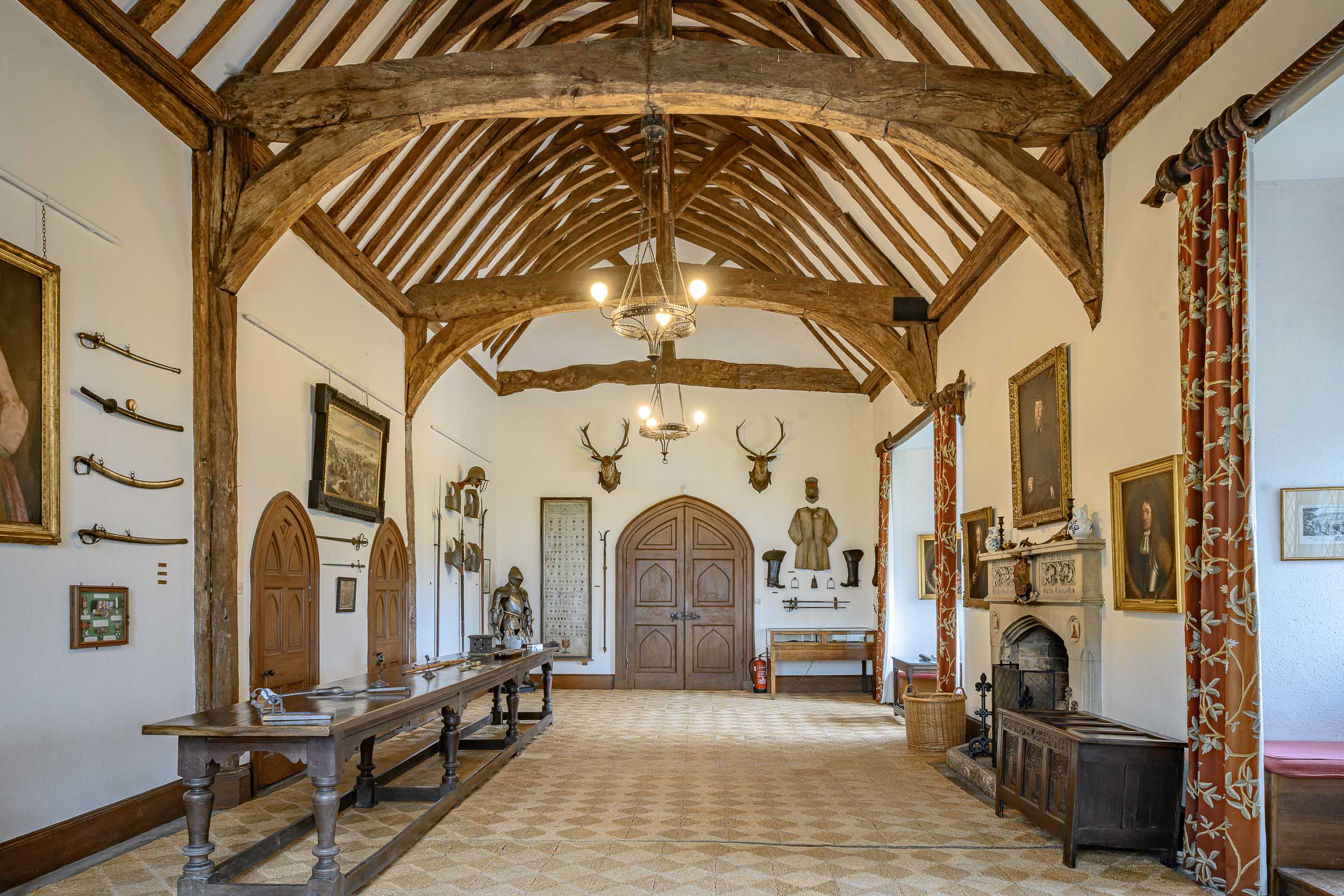


MAXSTOKE CASTLE
One of the oldest privately owned and continuously inhabited castles in England, completed in 1345 and lived in for which purpose it was built more than six and a half centuries ago.
Maxstoke Castle
Maxstoke Castle was built by Sir William de Clinton, 1st Earl of Huntingdon, in 1345 to a rectangular plan with octagonal towers at each angle and a broad moat surrounding the entire structure. The quadrangular castle is built of squared and coursed red sandstone, representing one of the best preserved examples of 14th-century fortified manor houses in England.
Sir William held high office and earned favour with King Edward III prior to and during the Hundred Years' War. Following his death in 1354, additions were made by Humphrey Stafford, 1st Duke of Buckingham, who acquired the castle in 1437 by exchanging it for other manors in Northamptonshire. The Stafford family resided at Maxstoke from 1438 to 1521, during which time the castle became closely intertwined with national history.
Sir Henry Stafford, second son of the 1st Duke of Buckingham, married Margaret Beaufort on 3 January 1458, with the wedding thought to have taken place at Maxstoke Castle. Margaret was the mother of the future King Henry VII and a formidable political figure. Capitalising on the political turmoil of the Wars of the Roses, Margaret played a fundamental role in securing the crown for her son. The marriage appears from household accounts and personal letters to have been happy, with the couple living for a while at various properties including time spent at Maxstoke.
The castle holds extraordinary historical artefacts that connect it directly to pivotal moments in English history. The original 15th-century chair in which King Henry VII was crowned upon Bosworth Field in 1485 still resides in the castle today. Other notable artefacts include a table owned by Sir Everard Digby, cousin to the Digbys of Coleshill and an infamous Gunpowder Plot conspirator in 1605, a chair and artefacts from Queen Mary's visit in 1927, and a Whispering Door relocated from Kenilworth Castle following its dismantlement.
The Dilke family, later Fetherston-Dilke, bought Maxstoke in 1599 and have, bar periods in the 20th century, been in continuous occupancy for over 400 years. In the 18th century, William Dilke of Maxstoke married Mary Fetherstone-Leigh of nearby Packwood House, linking the two Warwickshire estates through family connection that continues today.
The castle has served the nation in times of conflict. During the First World War, Maxstoke was used by the Red Cross as an auxiliary hospital for soldiers wounded on the Western Front. During the Second World War, the castle was requisitioned by the Ministry of Aircraft Production for the remote storage of aircraft engines, supplying the new factory near Castle Bromwich where Spitfires were made.
The castle is unusual in that it has survived largely intact. Over the centuries, Maxstoke has undergone modifications reflecting the personal tastes of each generation, but the original medieval curtain walls and core structure remain.
Maxstoke Castle has remained a private family home for which purpose it was built more than six and a half centuries ago. Its longevity is due to the character and efforts of those who have lived at the castle over time. The Fetherston-Dilke family continues this tradition of stewardship, maintaining Maxstoke as a living family residence whilst welcoming visitors by appointment to experience its extraordinary history and architecture.